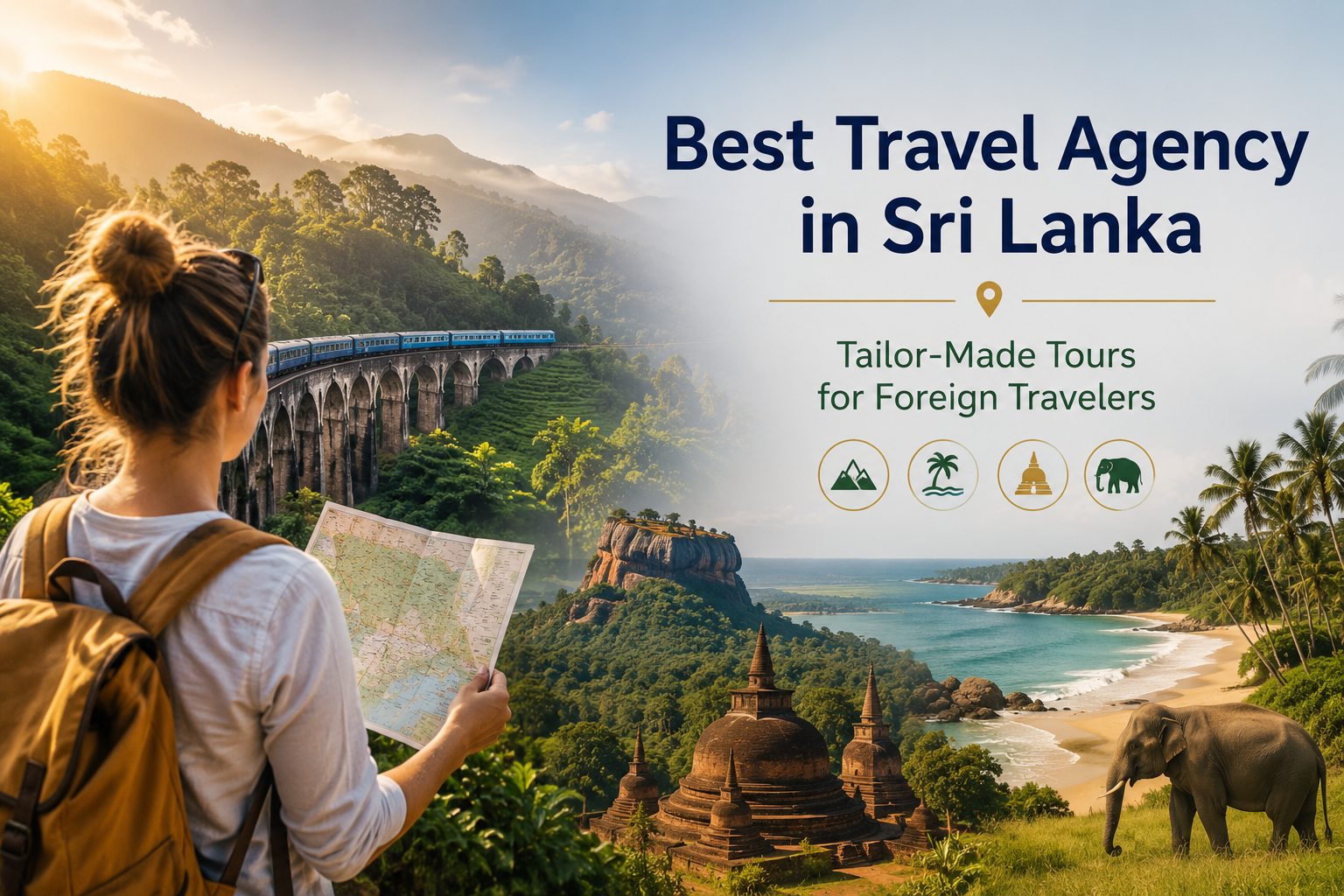
Sri Lanka consistently ranks among the most rewarding travel destinations in Asia — a compact island that packs extraordinary diversity into a relatively small space. Whether you’re drawn to ancient ruins, mountain scenery, coastal wildlife, or simply finding a quiet beach, the things to do in Sri Lanka span a range that few destinations anywhere in the world can match within the same geography.
This guide covers the best experiences the island has to offer, how to plan your visit effectively, and answers the questions most frequently searched by travellers before arriving in Sri Lanka for the first time.
Why Sri Lanka Rewards Every Type of Traveller
What makes Sri Lanka genuinely unusual is the density of experiences available across a relatively small island. You can watch wild elephants in the morning, visit a 2,000-year-old temple complex in the afternoon, and eat fresh seafood on a beach at sunset — all in the same day. The hill country, the cultural triangle, the south coast, the wildlife parks, and the ancient cities each offer a completely different flavour of the island, and the distances between them are manageable in a way that isn’t true of most countries with similar experiential range.
Best Things to Do in Sri Lanka
1. Ride the Scenic Hill Country Train
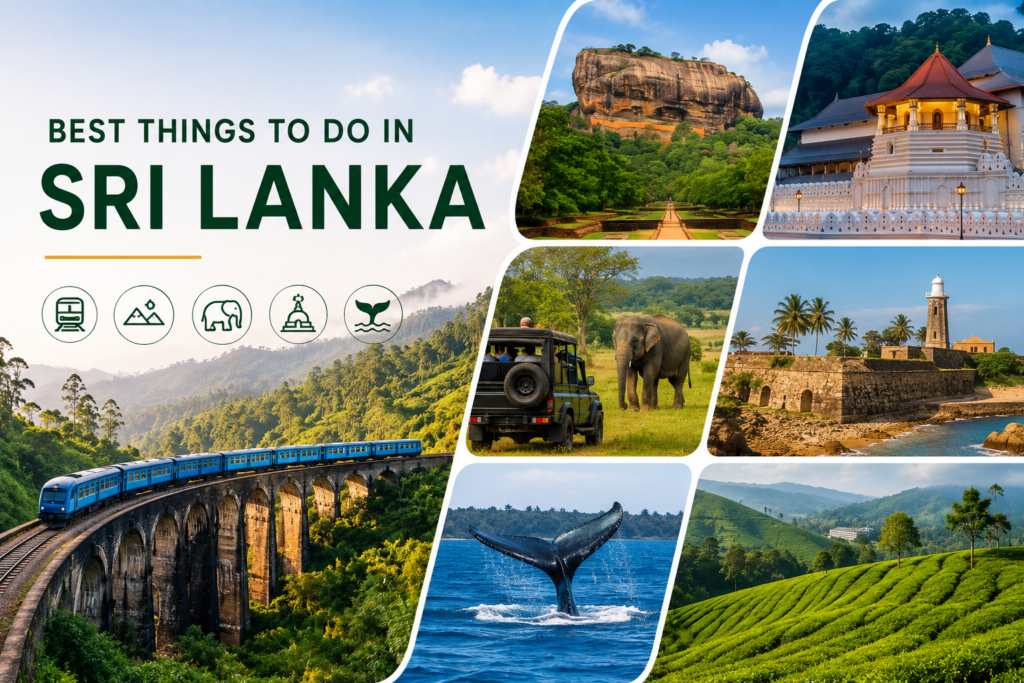
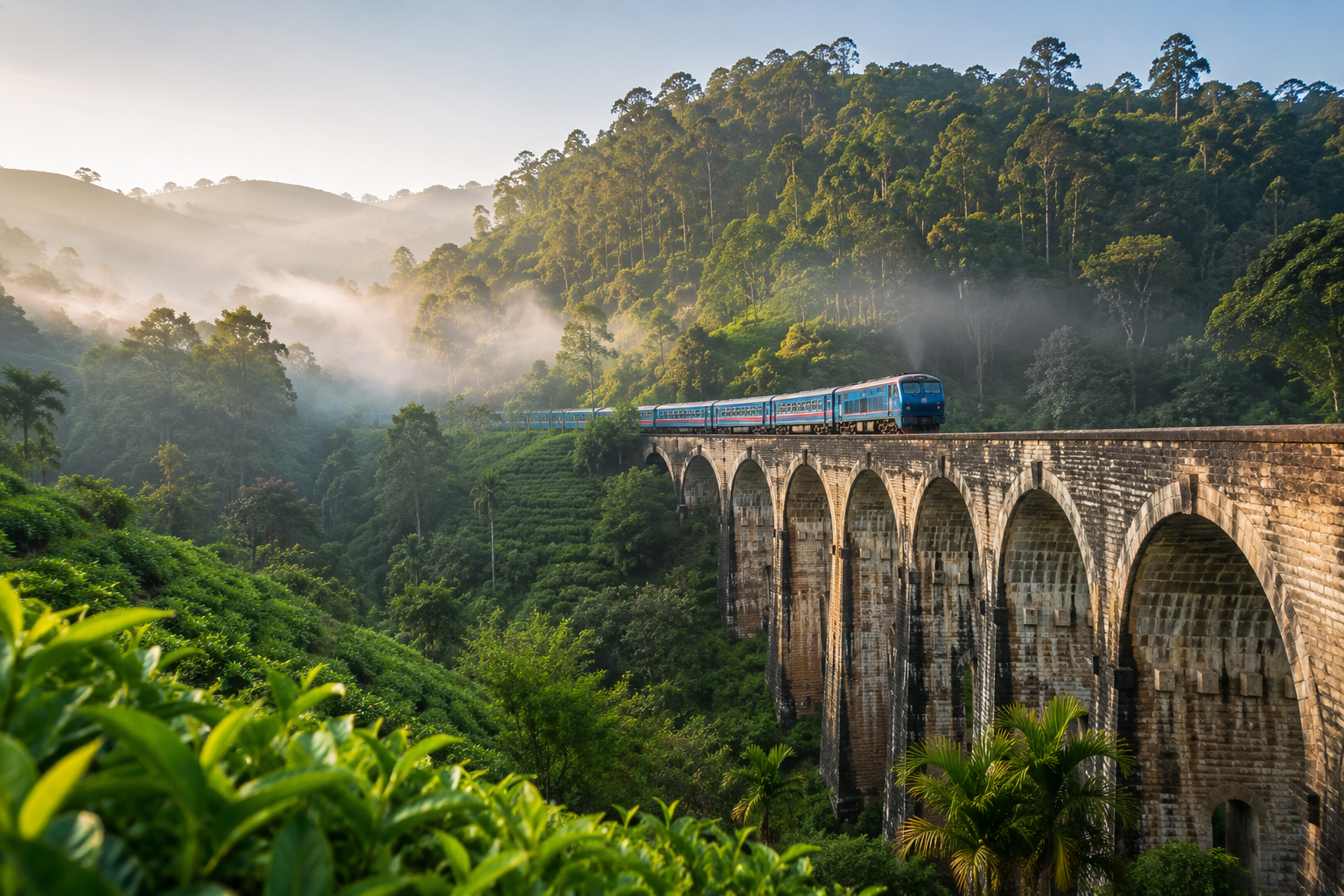
The train journey from Kandy to Ella — through mist-covered mountains, terraced tea plantations, and jungle-clad hillsides — is consistently ranked among the most beautiful rail journeys in the world. The stretch between Nanu Oya and Ella is particularly spectacular, with the train cutting through landscapes that change dramatically with altitude and cloud cover. Book seats in advance for the observation car and sit on the right-hand side travelling south from Kandy for the best views.
2. Explore Sigiriya Rock Fortress
Rising 200 metres from the surrounding jungle, Sigiriya is one of Sri Lanka’s most dramatic UNESCO World Heritage Sites — a 5th-century palace and fortress built on a single column of rock by King Kashyapa. The climb through terraced gardens, past ancient frescoes and the iconic Lion’s Paw entrance, to the summit palace ruins rewards with extraordinary views across the surrounding flat plains. Best visited at opening time (7 AM) to avoid both crowds and midday heat.
3. Visit the Temple of the Tooth, Kandy
The Sri Dalada Maligawa — the Temple of the Tooth Relic — is Sri Lanka’s most sacred Buddhist site, housing the relic of the Buddha’s tooth and situated on the edge of Kandy Lake in the island’s cultural capital. The evening puja ceremonies, conducted three times daily with drumming, chanting, and the opening of the inner shrine, are among the most atmospheric religious experiences in Asia.
4. Go on Safari at Yala or Udawalawe
Sri Lanka has some of the highest leopard density of any national park in the world, and Yala National Park is the premier destination to see them. Beyond leopards, Yala is home to elephants, sloth bears, crocodiles, water buffalo, and an extraordinary variety of birdlife. Udawalawe National Park, on the other hand, is Sri Lanka’s best destination for elephant sightings — with large herds moving across open grassland and reliable year-round viewing.
5. Walk the Ramparts of Galle Fort
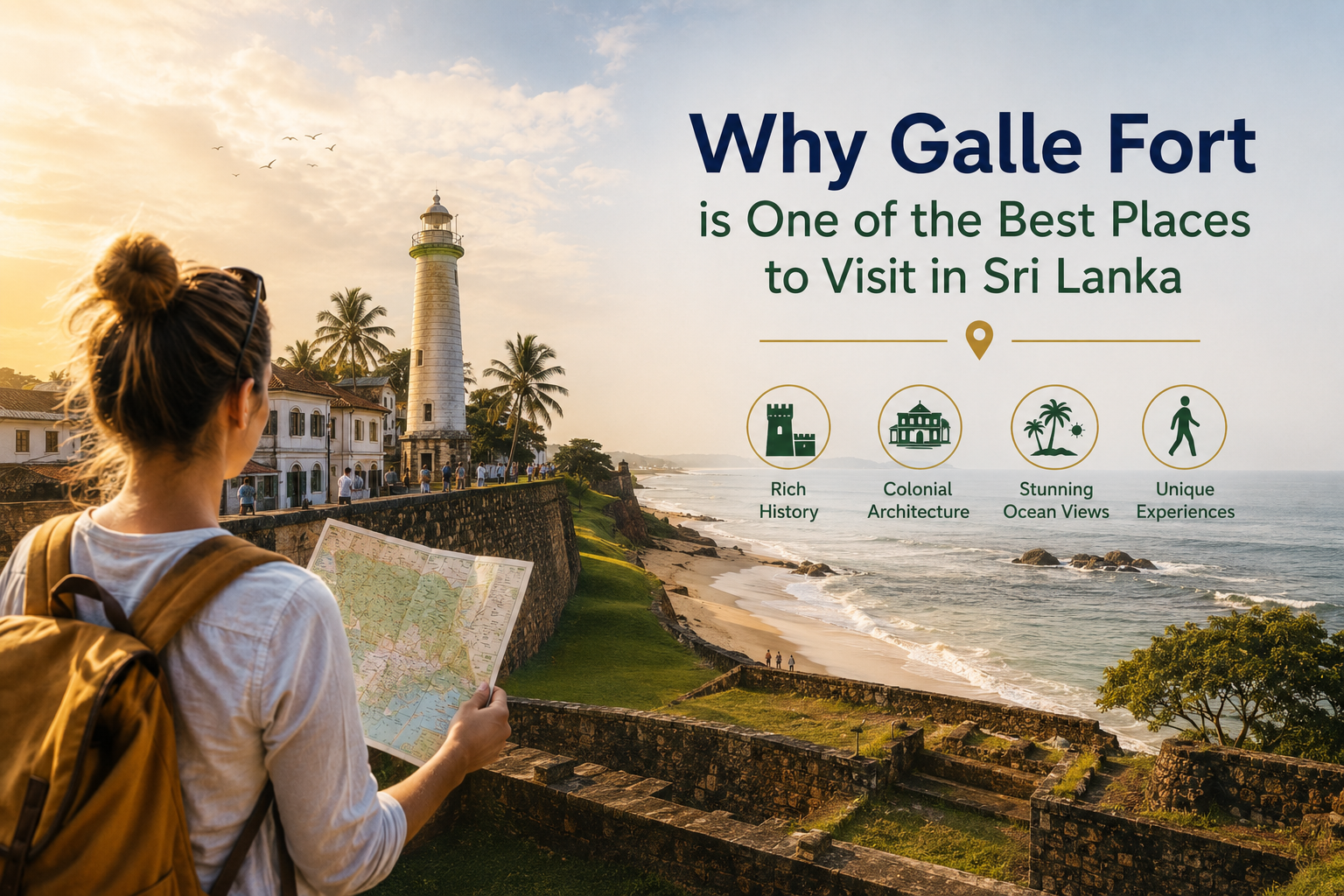
The UNESCO-listed Galle Fort on the southwestern coast is a 36-hectare colonial town of Dutch-built ramparts, cobblestone streets, boutique hotels, and some of the finest restaurants on the island. Walking the ocean-facing ramparts at sunset is the single most recommended activity within the fort — with the Indian Ocean stretching out on one side and red-roofed colonial buildings on the other.
6. Climb Adam’s Peak (Sri Pada)
Adam’s Peak is a conical mountain in the hill country sacred to four of Sri Lanka’s major religions — Buddhist, Hindu, Muslim, and Christian — each of which has its own interpretation of the footprint-shaped mark at the summit. The climb typically begins around 2–3 AM, ascending over 5,000 steps through a chain of lighted path stalls, to reach the summit in time for one of Sri Lanka’s most celebrated sunrises. The season runs from December to May.
7. Watch Blue Whales Off Mirissa
Between November and April, the waters off Mirissa on Sri Lanka’s south coast offer some of the most reliable blue whale sightings in the world — the largest animals on earth, viewed at relatively close range. Whale watching boats depart Mirissa harbour early morning, with sperm whales, spinner dolphins, and occasionally fin whales also frequently encountered alongside the blue whales.
8. Visit the Ancient City of Anuradhapura
Anuradhapura was Sri Lanka’s first ancient capital — a sprawling UNESCO World Heritage city of Buddhist stupas, monastery ruins, royal palace complexes, and sacred trees that dates back more than 2,500 years. The Sri Maha Bodhi — a sacred fig tree grown from a cutting of the original tree under which the Buddha achieved enlightenment — is among the oldest living trees with a documented planting date in the world.
9. Explore the Tea Plantations Around Nuwara Eliya
Known as “Little England” for its colonial-era architecture and cool climate, Nuwara Eliya sits at 1,868 metres above sea level surrounded by some of Sri Lanka’s most prolific tea growing country. A visit to a working tea estate — following the leaf from plucking through withering, rolling, oxidation, and firing — gives genuine insight into an industry that has defined the hill country landscape for over 150 years.
10. Snorkel or Dive at Hikkaduwa or Trincomalee
Sri Lanka’s waters offer excellent snorkelling and diving, with two distinct seasons on opposite coasts. Hikkaduwa on the southwest coast is accessible from November to April, with coral gardens, sea turtles, and reef fish. Trincomalee on the northeast coast offers world-class diving from May to October, including wreck diving and encounters with large pelagic species in clearer water conditions.
How to Plan the Best Sri Lanka Trip (Step-by-Step)
Step 1: Decide on Your Priorities
With so many things to do in Sri Lanka across different regions and experience types, starting with your personal priorities — wildlife, culture, beaches, scenery, food, adventure — helps narrow down which areas to focus on and which to skip if time is limited.
Step 2: Understand the Two Monsoon Seasons
Sri Lanka has two distinct monsoon patterns — the southwest monsoon affects the south and west coasts from May to October, while the northeast monsoon affects the north and east coasts from November to February. This means the island always has good weather somewhere, but timing your visit to the right coast matters.
Step 3: Allow Enough Time Between Locations
Sri Lanka is small but not always fast to travel across — mountain roads are winding, and the rail network, while scenic, is slow by international standards. Build realistic travel time between locations rather than compressing too many stops into a short window.
Step 4: Sequence Locations Logically
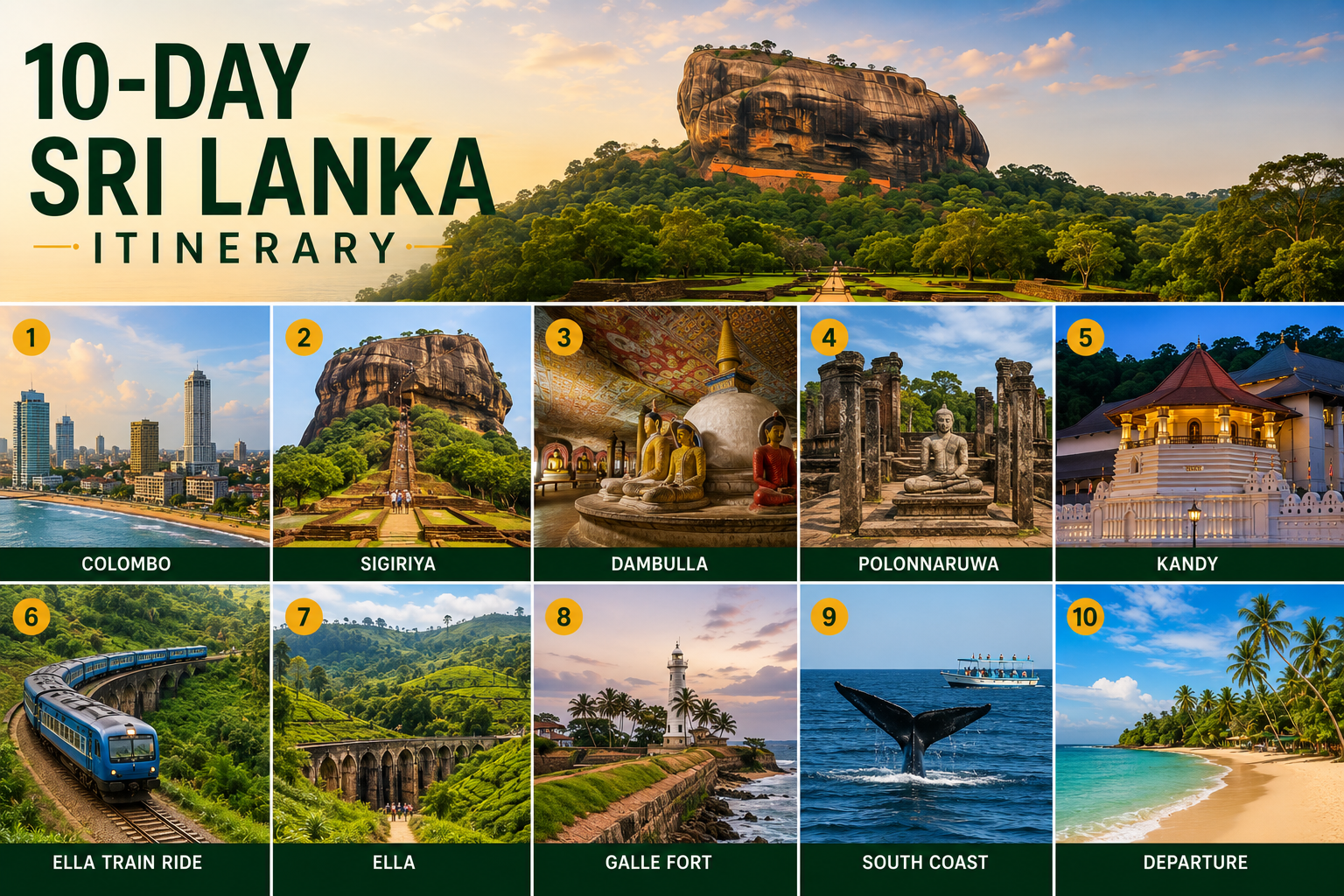
A well-planned Sri Lanka itinerary moves geographically rather than backtracking — typically arriving in Colombo, moving to the cultural triangle, across to the hill country, and down to the south coast before departure. This minimises travel time and maximises the variety of experiences.
Step 5: Book Safari and Train Tickets Early
Yala National Park jeep safaris and hill country train seats — particularly the Kandy to Ella observation car — fill up weeks or months ahead during peak season. Booking early is essential, not optional.
Step 6: Combine Cultural and Natural Experiences
The most rewarding Sri Lanka itineraries interweave cultural heritage, natural wildlife, and scenic landscapes rather than treating them as separate itineraries. Pairing Sigiriya with a nearby safari, or following the hill country train with Galle Fort, creates a richer overall experience.
Step 7: Work With a Local Specialist
Sri Lanka’s diversity of things to do makes it one of the easiest destinations to either underplan or overplan. A tailor-made itinerary from Travel Zoom Lanka’s Sri Lanka tour packages is built around your specific interests, travel dates, and pace — ensuring the right experiences are sequenced in a way that flows naturally from one to the next.
Most Searched Questions About Things to Do in Sri Lanka (FAQs)
1. What are the best things to do in Sri Lanka?
The most consistently recommended experiences include the Kandy to Ella scenic train journey, Sigiriya Rock Fortress, safari at Yala or Udawalawe, Galle Fort, the Temple of the Tooth in Kandy, whale watching at Mirissa, Adam’s Peak sunrise climb, and exploring the ancient city of Anuradhapura.
2. How many days do you need to see Sri Lanka properly?
Ten to fourteen days is the generally recommended minimum to cover the cultural triangle, hill country, and south coast without rushing. Seven days is possible for a condensed highlights itinerary, but longer trips allow for a more relaxed and rewarding experience.
3. What is the best time of year to visit Sri Lanka?
December to March is the most popular season, offering good weather on the south and west coasts and in the cultural triangle. The east coast is best from May to October. Sri Lanka can be visited year-round with itinerary adjustments based on monsoon patterns.
4. Is Sri Lanka good for first-time visitors to Asia?
Yes — Sri Lanka is widely considered one of the most accessible and rewarding introductions to South and Southeast Asian travel, with well-developed tourism infrastructure, English widely spoken, and an extraordinarily diverse range of experiences within a manageable geography.
5. What wildlife can you see in Sri Lanka?
Sri Lanka offers some of Asia’s best wildlife viewing — leopards, elephants, sloth bears, crocodiles, blue whales, sperm whales, spinner dolphins, sea turtles, and over 400 bird species including numerous endemics found nowhere else in the world.
6. Is the train from Kandy to Ella worth it?
Consistently described by travellers as one of the most beautiful train journeys in the world — yes, unambiguously. The scenery through the tea country is extraordinary and the experience is uniquely Sri Lankan. Book the observation car seats in advance.
7. Can you combine beach and culture in Sri Lanka?
Yes easily — Sri Lanka’s compact geography makes it straightforward to combine ancient sites and hill country scenery with south coast beaches and wildlife within a single two-week itinerary.
8. Do you need a guided tour or can you travel Sri Lanka independently?
Both are possible. Independent travel works well for experienced travellers, but a tailor-made guided itinerary adds significant value in Sri Lanka — providing local knowledge, pre-booked logistics, and the flexibility to go deeper into experiences rather than spending time on transport and planning logistics.
Final Thoughts
The things to do in Sri Lanka are extraordinary in their variety and density — ancient civilisations, mountain train journeys, leopard safaris, whale watching, colonial forts, and some of the finest beaches in the Indian Ocean, all within a single island. The key to experiencing all of it well is planning that matches the right experiences to your interests and sequences them in a way that makes geographic and logistical sense.
Travel Zoom Lanka specialises in personalised Sri Lanka itineraries for international travellers — building each trip around individual interests, travel style, and pace rather than fitting everyone into the same fixed route.
Ready to start planning your Sri Lanka adventure? Explore our tailor-made tour packages or get in touch with our team to begin building your ideal itinerary.