If you’ve been searching “is Sri Lanka safe to travel right now,” you’re not alone. Between the 2022 economic crisis, Cyclone Ditwah in late 2025, and the ever-changing global travel landscape, it’s completely natural to want a clear, verified answer before booking. This guide gives you exactly that — an honest, up-to-date assessment of safety in Sri Lanka in 2026, covering government advisories, regional conditions, practical traveller tips, and the most frequently asked questions people are searching right now.
The short answer: Yes, Sri Lanka is safe to visit in 2026. Tourism is active, major attractions are open, and thousands of international visitors are arriving every month. Here’s everything you need to know before you go.
Current Sri Lanka Safety Status (2026): What the Data Says
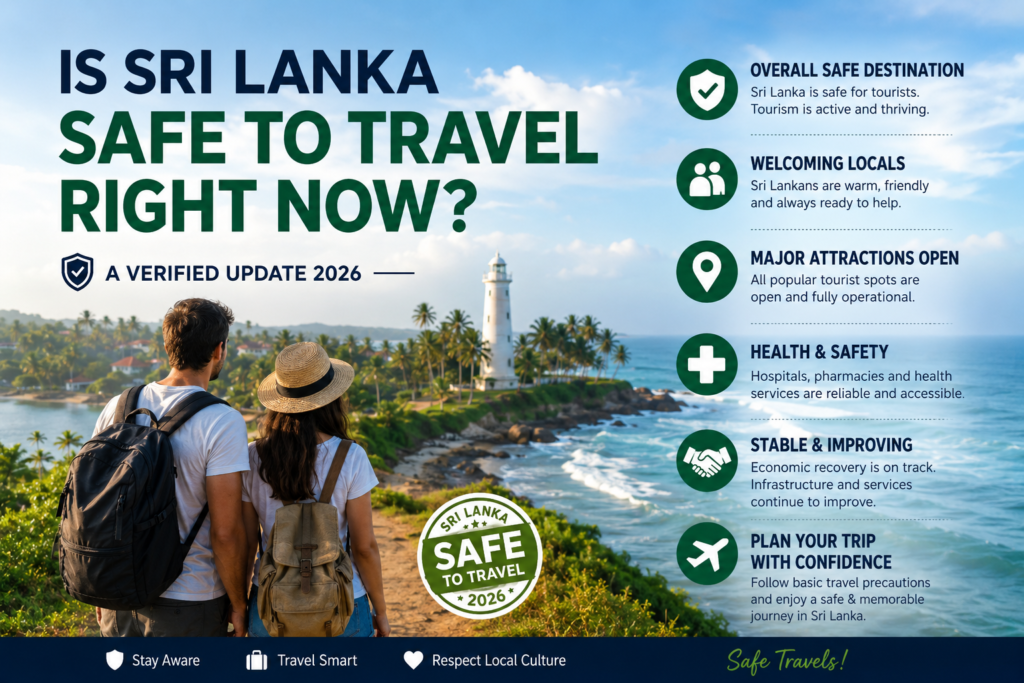
Sri Lanka’s overall security situation has improved significantly since the turbulence of 2022. Several key indicators confirm this:
Government travel advisories from major Western nations reflect measured, not alarming, positions. The US State Department currently rates Sri Lanka at Level 2 (Exercise Increased Caution) — the same rating applied to dozens of popular European and Asian destinations — citing civil unrest concerns rather than direct threats to tourists. The UK’s Foreign Commonwealth and Development Office (FCDO) rates Sri Lanka as generally safe for British nationals. Canada’s advisory focuses primarily on health precautions rather than security. Australia’s Smartraveller advises a “high degree of caution” due to the potential for protests, but confirms tourist destinations are operating normally.
Tourism numbers tell the real story. Sri Lanka welcomed 2.17 million tourist arrivals by the end of 2025, surpassing the previous year’s total of 2.05 million. Arugam Bay on the east coast recorded its highest ever visitor numbers in early 2026 with over 12,000 international arrivals in a single month. These are not the numbers of a country that is unsafe.
Economic recovery is on track. The Sri Lankan rupee has stabilised at approximately 320 to the US dollar since late 2025. GDP posted growth of 2.1% in 2025 — the first positive growth since 2021. The International Monetary Fund confirmed in early 2026 that the country remains on track with its $2.9 billion recovery programme. Fuel queues and power cuts, which defined the 2022 crisis, are essentially a thing of the past.
What Happened with Cyclone Ditwah? (November 2025 Update)
Cyclone Ditwah made landfall on Sri Lanka’s eastern coast on 28 November 2025, causing widespread flooding and landslides — particularly in the central hill country. The human impact was significant, with over 600 lives lost and considerable infrastructure damage to roads, bridges, and rail routes in the highlands.
However, recovery has been swift and thorough. By early 2026, all major tourist destinations — including Kandy, Nuwara Eliya, Ella, Sigiriya, and the south coast — had returned to normal operations. Colombo and the coastal south were largely unaffected throughout.
The Australian government’s travel advice notes that while infrastructure repair work (including rail routes and roads in the central mountain districts) continues, tourist destinations are operating as usual. If you are planning travel to the hill country, it’s wise to check conditions with your tour operator before departure — something that Travel Zoom Lanka handles as a routine part of every booking.
Is Sri Lanka Safe by Region? Area-by-Area Breakdown
Colombo — Safe, Active, Fully Operational
The capital is busy, modern, and functioning normally. Hotels, restaurants, transport links, and attractions are all open. The primary concern here is petty crime — pickpocketing in crowded markets like Pettah has increased slightly, so standard precautions apply: don’t carry large amounts of cash, use secure bags, and be aware in busy areas.
Kandy & the Hill Country — Safe with Minor Caveats
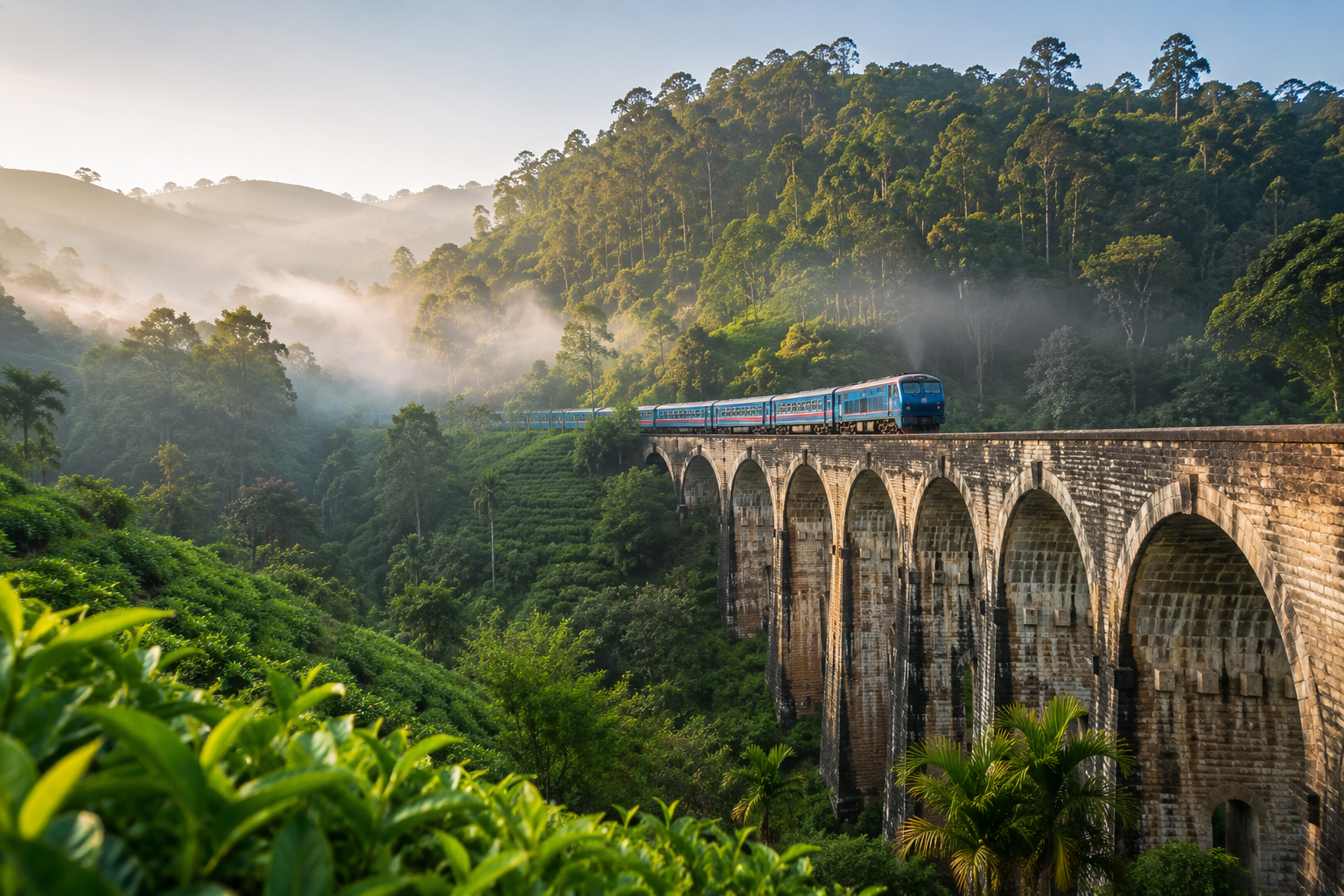
Kandy and the surrounding hill country towns are welcoming tourists in normal volumes. Some roads and railway lines in the more remote mountain districts are still being repaired following Cyclone Ditwah, so road travel to certain areas should be confirmed before departure. The famous Kandy–Ella scenic train route is running, but check with your operator for the latest status on specific segments.
Nuwara Eliya — Open and Scenic
The tea country is open and absolutely stunning. Minor infrastructure repairs continue in some highland zones, but tourist accommodation, tea estate tours, and all major experiences are fully operational.
Bentota & the South Coast — Unaffected and Excellent
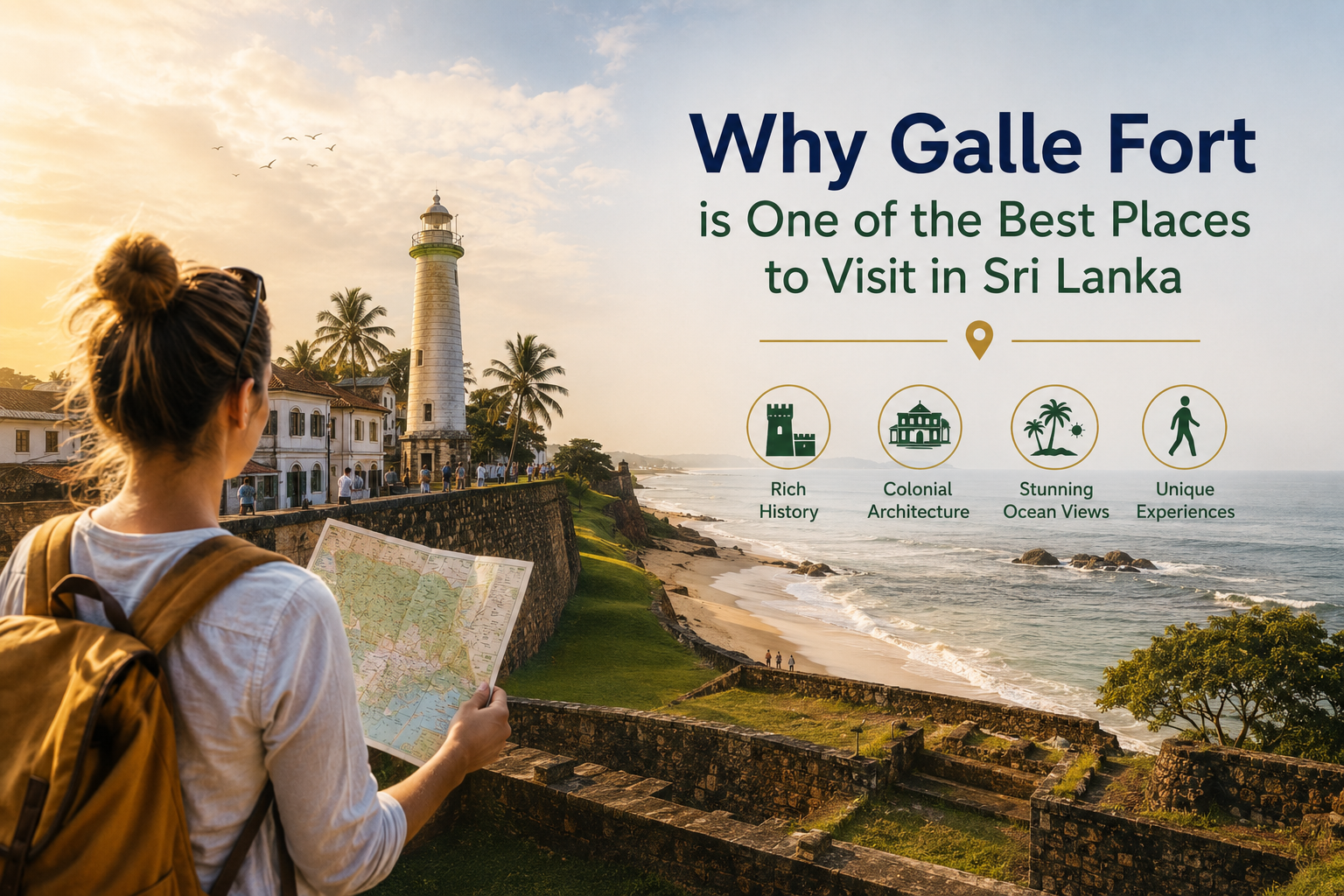
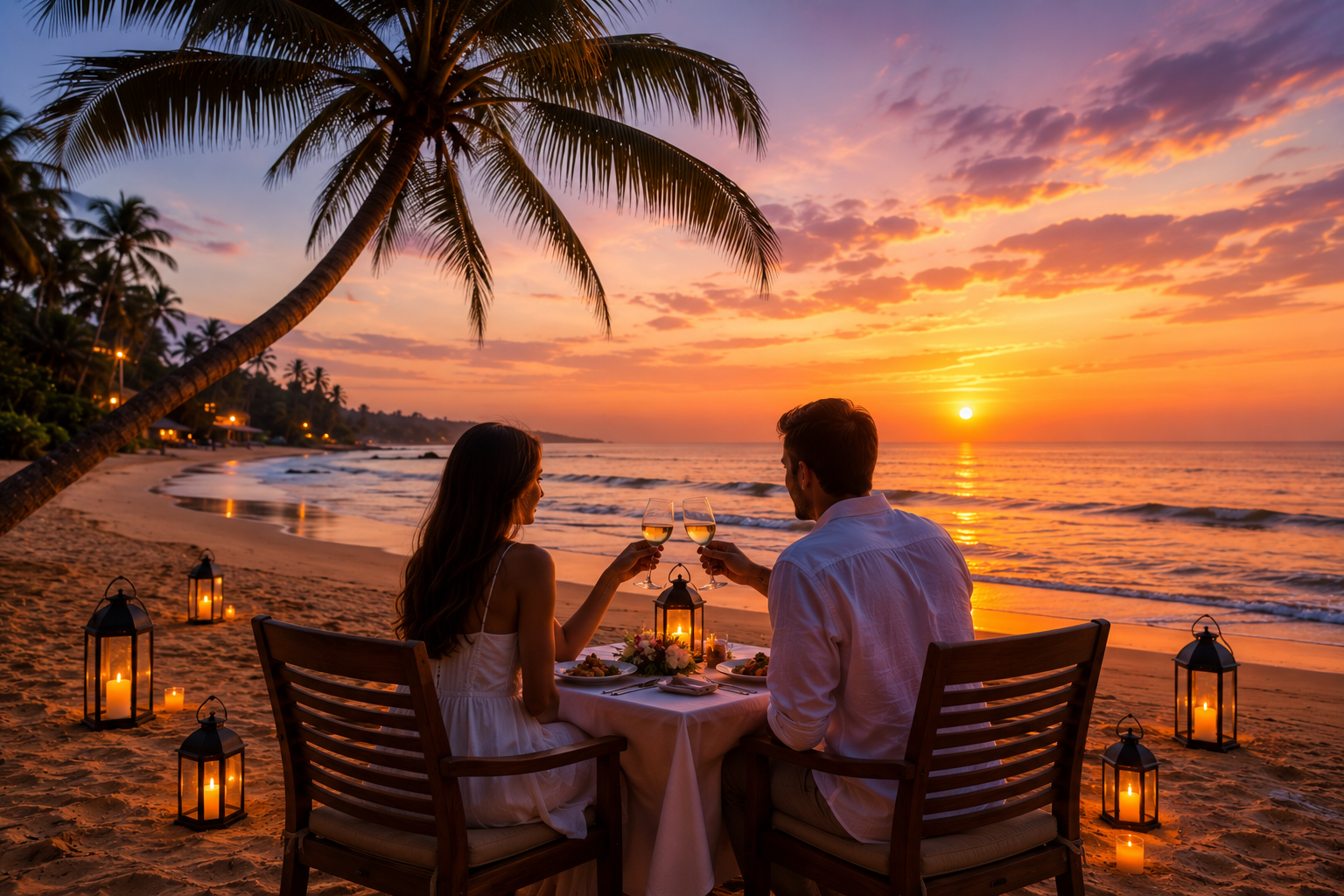
The south coast — including Bentota, Mirissa, Galle, and Hikkaduwa — was minimally impacted by the cyclone and remains one of the safest, most enjoyable parts of the country. Beach resorts, water sports, whale watching, and coastal dining are all operating at full capacity. This region is also the most popular for couples booking a romantic Sri Lanka tour package for couples.
Dambulla, Sigiriya & the Cultural Triangle — Fully Open
Sigiriya Rock Fortress, the Dambulla Cave Temple, and the surrounding cultural sites are all open and welcoming large numbers of visitors. No safety concerns specific to these areas.
Northern Sri Lanka (Jaffna Peninsula) — Accessible with Awareness
The north is increasingly popular with travellers and is generally safe. However, in remote and undeveloped zones of the Jaffna Peninsula and some northeastern areas, residual landmine risks from the civil conflict era still exist. Staying on established roads and using a local guide is strongly recommended for off-the-beaten-track exploration in these regions.
How to Stay Safe in Sri Lanka: Step-by-Step Practical Guide
Following these steps will ensure your trip is smooth, safe, and stress-free.
Step 1 — Check the latest travel advisory for your country Before booking, visit your government’s official travel advice portal (US State Department, UK FCDO, Australian Smartraveller, or equivalent). These are updated regularly and give the most current official position.
Step 2 — Book through a reputable, locally based tour operator A local expert has real-time, ground-level knowledge that no travel advisory can match. The team at Travel Zoom Lanka monitors conditions across all regions and builds itineraries around the safest, most accessible routes. They will proactively reroute or adjust your trip if any area presents concerns.
Step 3 — Get comprehensive travel insurance This is non-negotiable. Your policy should cover medical evacuation, weather-related disruptions, trip cancellation, and lost belongings. Given the cyclone recovery and occasional transport disruptions in highland areas, weather-related disruption cover is especially important.
Step 4 — Register with your embassy Most governments offer a traveller registration service (e.g. STEP for US citizens). In the unlikely event of an emergency, this allows your government to contact you quickly.
Step 5 — Save key emergency contacts before you travel Sri Lanka’s national emergency number is 119 (police). Sri Lanka Tourism operates a 24-hour tourist hotline on 1912. Save both before you land.
Step 6 — Respect local customs and religious sites Cultural missteps — particularly at Buddhist temples (inappropriate dress, disrespectful photographs) — can escalate quickly in Sri Lanka. Always cover shoulders and knees at religious sites, remove footwear when entering temples, and follow signage carefully.
Step 7 — Drink bottled water only Tap water is not safe to drink. Always use sealed bottled water, including for brushing teeth, and avoid ice from unknown sources.
Step 8 — Use reliable, pre-booked transport Road safety is a genuine concern in Sri Lanka — traffic accidents account for more tourist injuries than crime. Using vetted, pre-booked drivers through your tour operator is significantly safer than hailing informal transport, particularly on the A2 coastal highway.
Most-Searched Safety Questions About Sri Lanka Right Now
These are the questions travellers are searching most frequently in 2026 — answered clearly.
“Is Sri Lanka safe after the cyclone?” Yes. Cyclone Ditwah caused significant damage in late 2025, but recovery has been fast. All major tourist areas are operational. Some highland road and rail infrastructure is still being repaired, but this affects travel convenience more than safety.
“Is it safe to visit Sri Lanka during political unrest?” Sri Lanka’s political situation has stabilised considerably since 2022. Occasional protests do occur — a demonstration of around 3,000 people near Galle Face Green in Colombo took place in January 2026 over fuel prices. These are localised and generally peaceful. Avoiding protest areas is standard common sense, not cause for cancellation.
“Are there any areas of Sri Lanka to avoid?” No entire regions are off-limits for tourists. Remote areas of the north and northeast (particularly undeveloped zones near the Jaffna Peninsula) carry residual landmine risks from the civil war era. Stay on established roads and use local guides in these areas.
“Is Sri Lanka safe for solo female travellers?” Sri Lanka carries a medium safety rating for solo female travellers. Verbal harassment and unwanted attention can occur, especially in crowded areas. Travelling with a reputable tour operator, dressing modestly in non-beach areas, and avoiding isolated locations at night significantly reduces risk.
“Is Sri Lanka safe for couples and honeymooners?” Absolutely. Sri Lanka is one of Asia’s top honeymoon destinations. Couples travelling on a structured romantic Sri Lanka tour package for couples through an established operator have an extremely low-risk, high-reward experience.
“Has Sri Lanka recovered from the 2022 economic crisis?” Significantly, yes. The economy returned to growth in 2025 for the first time since 2021. The rupee is stable, fuel is available, and power cuts — which reached 13 hours per day during the crisis — now occur less than twice monthly for scheduled maintenance.
Frequently Asked Questions (FAQs)
Q: Do I need a visa to visit Sri Lanka? A: Most nationalities require an Electronic Travel Authorisation (ETA), which is applied for online before travel. The standard tourist ETA allows a 30-day stay. The process is simple and typically approved within a few days. Check the Department of Immigration and Emigration website for current requirements specific to your nationality.
Q: What is the emergency number in Sri Lanka? A: The national police emergency number is 119. Sri Lanka Tourism’s 24-hour helpline for visitors is 1912.
Q: Is it safe to drive in Sri Lanka? A: Road conditions and driving standards vary considerably. Traffic accidents are the most common cause of tourist injury in Sri Lanka. Hiring a pre-vetted chauffeur-driven vehicle through your tour operator — as offered by Travel Zoom Lanka — is the safest and most comfortable way to travel between destinations.
Q: What health precautions should I take before visiting Sri Lanka? A: Consult a travel health clinic or your GP at least 4–6 weeks before departure. Hepatitis A, Typhoid, and Tetanus vaccinations are generally recommended. Mosquito repellent and anti-malarial medication may be advised for certain regions. Drink only bottled or purified water throughout your stay.
Q: Is Sri Lanka safe for families with children? A: Yes. Sri Lanka is a very family-friendly destination. Major tourist areas are well set up for families, and the country’s warm, welcoming culture extends to children in particular.
Q: How do I stay updated on Sri Lanka’s safety situation while travelling? A: Save the Sri Lanka Tourism hotline (1912) in your phone. Monitor your government’s travel advisory portal. Ask your tour operator for daily updates — local operators like Travel Zoom Lanka have the most current, ground-level information.
Planning Your Visit: What to Do Next
Sri Lanka in 2026 is safe, open, and genuinely rewarding. The country has navigated significant challenges — economic crisis, political turbulence, and a major cyclone — with remarkable resilience, and it continues to welcome millions of visitors with the warmth and hospitality for which it is famous.
The best way to travel safely in Sri Lanka is to travel smart — with a good travel insurance policy, up-to-date advisory checks, and a trusted local operator who knows the ground conditions in real time.
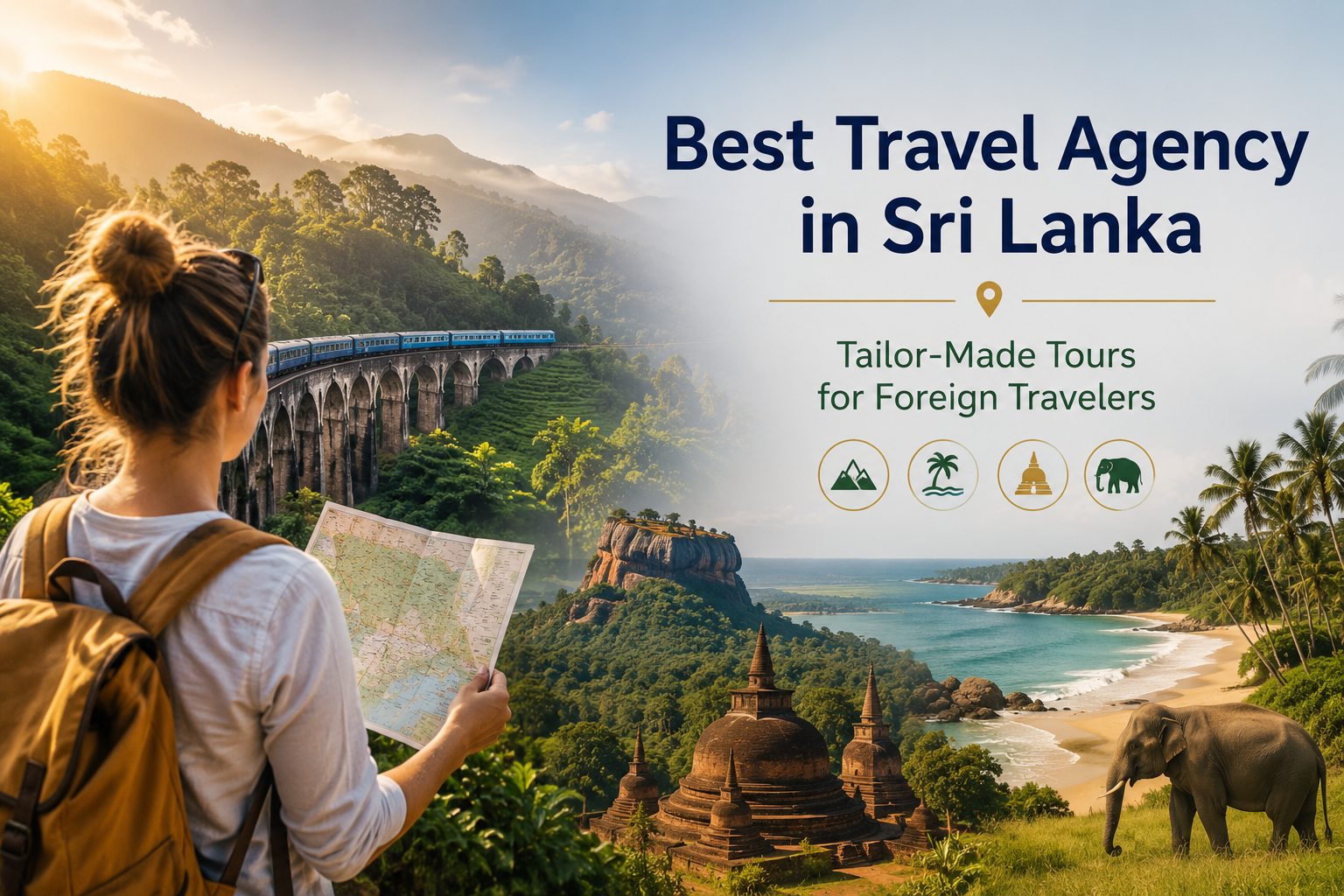
Browse the full range of Sri Lanka tour packages at travelzoomlanka.com/tours/ — from cultural heritage itineraries to romantic couples packages and bespoke tailormade journeys. If you have specific questions about current conditions, regional access, or how to build an itinerary around the safest and most rewarding destinations right now, get in touch with the Travel Zoom Lanka team directly — they’ll give you an honest, up-to-date answer.
Final Word
Sri Lanka is not a destination to fear. It is a destination to understand — and when you do, the picture is overwhelmingly positive. A country of extraordinary natural beauty, ancient culture, and genuine warmth is open, active, and ready to welcome you. Don’t let outdated headlines make the decision for you. Let the data, the advisories, and the experience of the millions of travellers who visited in 2025 and 2026 speak for themselves.
Sri Lanka is safe. Go.
For personalised travel advice, current itinerary availability, and up-to-date safety information, visit Travel Zoom Lanka or contact the team here.