Sigiriya is world-famous for its ancient rock fortress — a UNESCO World Heritage Site that draws hundreds of thousands of visitors each year. But just beyond the shadow of Lion Rock lies something equally extraordinary: a living, breathing village where traditional Sri Lankan life continues largely as it has for centuries.
The Sigiriya Village Tour is one of Sri Lanka’s most authentic cultural experiences. It takes you off the tourist trail and into the heart of rural Sri Lanka — past paddy fields, through jungle paths, and into the homes and workshops of local families who have farmed, cooked, and crafted here for generations.
Whether you are a solo traveller, a couple, or a family with children, a Sigiriya village tour offers a deeply human encounter with a culture that is warm, generous, and genuinely fascinating. It is not a performance staged for tourists — it is an invitation into real everyday life.
This guide covers everything you need to know: what to expect, what activities are included, what you will eat, how to book, and answers to the most commonly asked questions about this experience.
What Is a Sigiriya Village Tour?
A Sigiriya Village Tour is a guided cultural excursion that takes visitors through the traditional farming villages surrounding Sigiriya in the Cultural Triangle of Sri Lanka. The tour typically lasts between two and four hours and combines nature, food, history, and hands-on cultural activities into one immersive experience.
Unlike a standard sightseeing trip, the village tour is participatory. You do not just observe — you cook, ride, taste, touch, and connect. Local guides, often villagers themselves, walk you through their daily lives and share the customs and knowledge that have been passed down through generations.
The tour is usually conducted in the early morning or late afternoon, when the light over the paddy fields is golden and the heat of the midday sun has either not yet arrived or already passed.
What to Expect on a Sigiriya Village Tour
1. The Ox Cart Ride
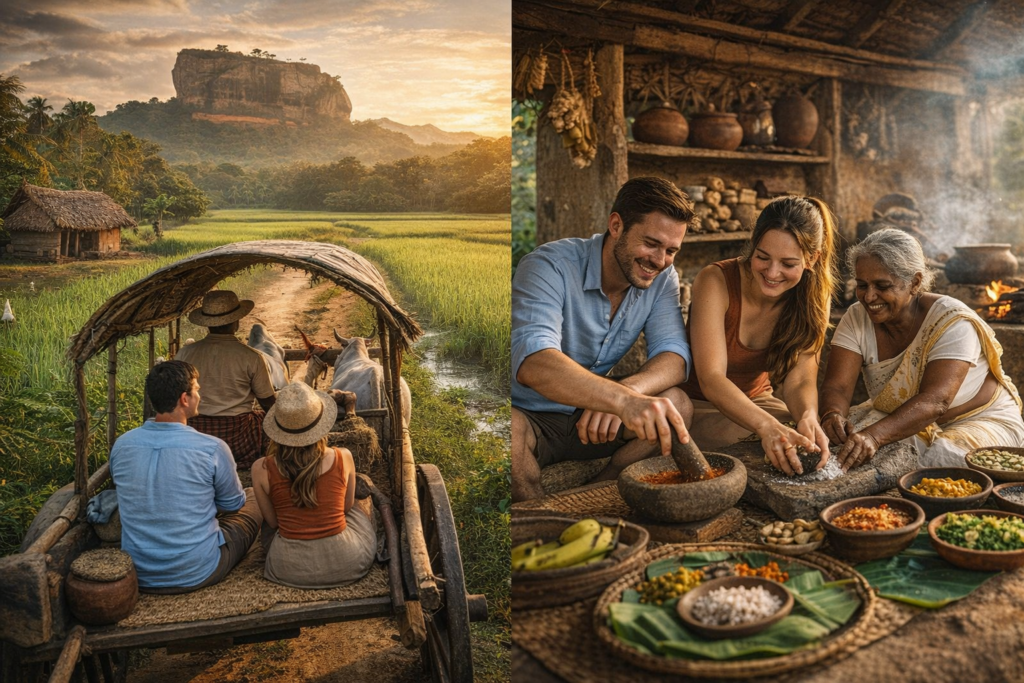
The experience often begins with an ox cart ride through narrow village lanes. This traditional mode of transport, once the backbone of rural Sri Lanka, gives you an immediate sense of stepping back in time. As the cart moves gently through the village, you will pass local homes, children playing, and elders going about their daily routines.
2. Canoe Ride on the Village Tank
Sri Lanka’s ancient irrigation system is one of the wonders of the ancient world, and the village tank (reservoir) near Sigiriya is a living part of that legacy. A traditional canoe ride across the tank offers stunning views of Sigiriya Rock reflected in the still water, surrounded by jungle. Birds — including kingfishers, herons, and painted storks — are commonly spotted along the way.
3. Paddy Field Walk and Farming Activities
You will walk through working paddy fields and learn about the rice cultivation cycle that has sustained Sri Lankan villages for over two millennia. During the right season, visitors can try their hand at planting or harvesting rice alongside local farmers. Even outside the harvest season, guides explain traditional farming methods, irrigation techniques, and the role of rice in Sri Lankan culture and spirituality.
4. Traditional Sri Lankan Cooking Demonstration
Food is central to any Sri Lankan cultural experience, and the village tour delivers on this fully. You will visit a local home where a village woman — usually the matriarch of the household — prepares a traditional Sri Lankan meal using a clay pot over a wood fire.
Dishes typically include:
- Jackfruit curry (a Sri Lankan staple)
- Dhal curry with coconut milk
- Pol sambol (fresh coconut relish)
- Papadams cooked over an open flame
- Fresh roti or rice
You are not just watching — most tours invite guests to join in the preparation, learning to grind spices on a flat stone, grate fresh coconut, and stir a simmering curry. The meal that follows is eaten together, usually seated on a woven mat, in the way that Sri Lankan families have shared food for generations.
5. Herbal Garden and Ayurvedic Remedies
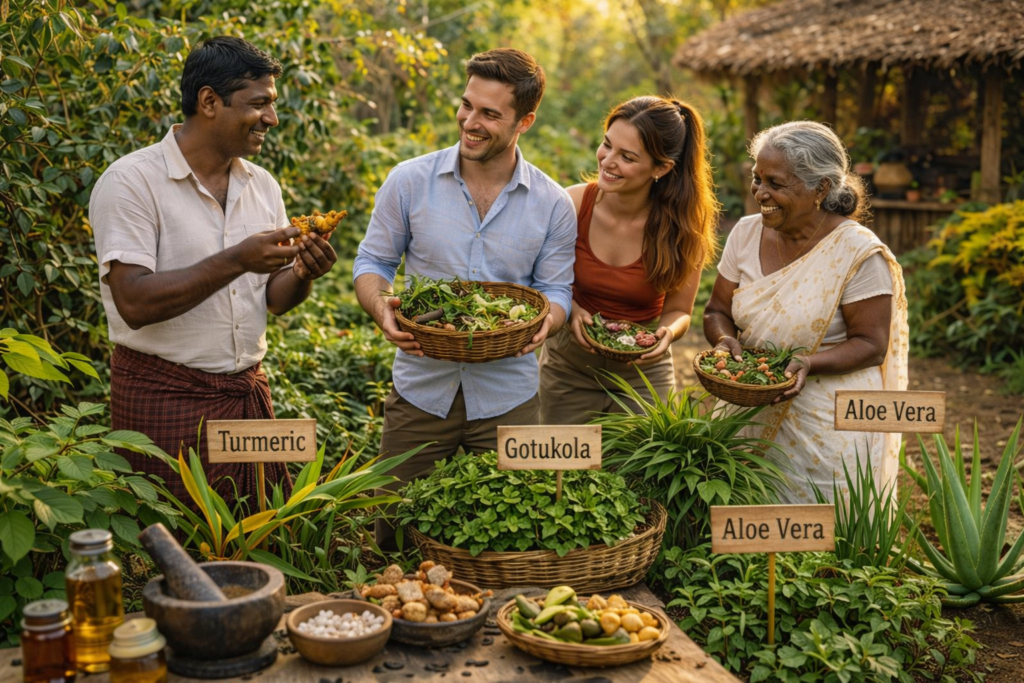
Many village tours include a stop at a herbal garden maintained by a local family. Here you will be introduced to the plants used in traditional Ayurvedic medicine — turmeric, neem, moringa, gotukola, and dozens of others — and learn how they are used to treat common ailments. This segment often includes a brief demonstration of natural remedies and occasionally an opportunity to taste herbal teas.
6. Village Crafts and Traditional Trades
Depending on the tour, you may also visit local artisans — a potter shaping clay, a weaver working a traditional loom, or a craftsman carving wood. These workshops are not tourist shops; they are working studios where villagers make their livelihoods.
Sigiriya Village Tour: The Food Experience in Detail
Sri Lankan village food is among the most flavourful in all of Asia, yet it remains relatively unknown compared to the country’s tourist highlights. The village meal on a Sigiriya tour is often described by visitors as one of the best meals of their entire trip — not because it is elaborate, but because it is honest, fresh, and cooked with genuine care.
Everything is prepared on the day of your visit. Coconuts are cracked and grated fresh. Spices are ground by hand. Curries are slow-cooked in clay pots over wood fires, which give them a depth of flavour impossible to replicate on a modern gas stove.
For travellers with dietary requirements: village cooking is naturally vegetarian-friendly. Most dishes are plant-based, and guides can usually accommodate specific needs with advance notice.
Best Time to Take a Sigiriya Village Tour
The early morning tour (typically starting at 6:00 AM or 7:00 AM) is the most popular option. At this hour, the paddy fields are misted, the birds are active, and the village is just waking up. The light is extraordinary for photography.
The late afternoon tour (usually starting at 3:00 PM or 4:00 PM) is equally beautiful, with the warm golden light of late afternoon bathing the landscape. This timing allows you to watch the sunset over the village tank after your tour concludes.
Avoid the midday hours between 11:00 AM and 2:00 PM, when the tropical heat can make the walking portions of the tour uncomfortable.
In terms of seasons, the tour runs year-round. The dry season (May to September in the Cultural Triangle) offers easier walking conditions. The wet season (October to January) brings lush green scenery and active paddy farming — a different but equally rewarding experience.
How to Book a Sigiriya Village Tour: Step-by-Step Guide
(This section is structured for HowTo schema markup)
How to Book a Sigiriya Village Tour in Sri Lanka
Step 1: Choose your tour provider Select a reputable, locally-run operator who works directly with village families and employs local guides. This ensures your money benefits the community and that your experience is authentic rather than staged.
Step 2: Select your preferred time slot Decide between the morning tour and the afternoon tour based on your schedule and priorities. Morning tours are recommended for photographers and birdwatchers; afternoon tours suit those who prefer a leisurely start to their day.
Step 3: Check what is included Confirm that the tour includes the ox cart ride, canoe ride, cooking demonstration, and village meal. Some providers offer different tiers of experience.
Step 4: Confirm dietary requirements Inform your operator of any allergies or dietary restrictions at the time of booking. Village cooking is adaptable but requires advance notice.
Step 5: Book your place Foreigners visiting Sri Lanka can conveniently book online through trusted local travel operators. Visit travelzoomlanka.com/event-suits to secure your Sigiriya Village Tour. For enquiries, contact the team directly via the contact page.
Step 6: What to bring Pack light, comfortable clothing (modest dress is respectful in village settings), walking shoes or sandals, sunscreen, a hat, insect repellent, and a camera. Most tours supply drinking water.
Step 7: Arrive on time Village tours are timed to natural rhythms — the morning mist, the cooking fire, the movement of animals. Arriving late disrupts the experience for everyone. Plan to arrive at your meeting point at least five minutes before the start time.
Tips for Getting the Most Out of Your Sigiriya Village Tour
- Learn a few Sinhala words before you go. Even a simple ayubowan (greetings/may you live long) will delight your hosts and open doors.
- Put your phone down occasionally. The cooking demonstration, canoe ride, and meal are all better experienced in the moment than through a screen.
- Ask questions. Village guides are passionate about their way of life. Questions about farming, cooking, and local customs are welcomed enthusiastically.
- Bring small notes for tipping your guide. A tip is not obligatory but is deeply appreciated and directly supports local families.
- Be open to the pace. Village time moves differently. Embrace the slowness — it is, after all, the whole point.
Frequently Asked Questions About the Sigiriya Village Tour
(This section is structured for FAQ schema markup)
Q: What is included in a Sigiriya Village Tour? A: A typical Sigiriya Village Tour includes an ox cart ride, a traditional canoe ride on the village tank, a paddy field walk, a Sri Lankan cooking demonstration, a shared village meal, a herbal garden visit, and interaction with local craftspeople. Specific inclusions vary by operator.
Q: How long does the Sigiriya Village Tour take? A: Most tours last between two and four hours, depending on the operator and whether a meal is included. Morning and afternoon sessions are both available.
Q: Is the Sigiriya Village Tour suitable for children? A: Yes, absolutely. The tour is family-friendly and children particularly enjoy the ox cart and canoe rides, as well as participating in the cooking. It is an educational and engaging experience for young travellers.
Q: Is the food on the Sigiriya Village Tour vegetarian? A: Yes, traditional village food in this region is predominantly plant-based. Dishes include rice, various curries, coconut-based dishes, and fresh chutneys. Inform your operator in advance of any specific dietary needs.
Q: Do I need to book in advance? A: Advance booking is strongly recommended, especially during peak tourist season (December to March). Village tours involve real families and require preparation — walk-in availability is limited.
Q: What should I wear on a Sigiriya Village Tour? A: Wear comfortable, modest clothing that covers your shoulders and knees as a mark of respect in a village setting. Light, breathable fabrics are ideal for the tropical climate. Closed-toe shoes or sturdy sandals are recommended for the paddy field walk.
Q: Is the Sigiriya Village Tour physically demanding? A: No. The walking involved is gentle and suitable for most fitness levels. The terrain is flat and the pace is relaxed. Those with mobility challenges should inform their operator in advance.
Q: How much does a Sigiriya Village Tour cost? A: Prices vary by operator and inclusions, but tours typically range from USD $25 to USD $60 per person. Tours that include a full meal and multiple activities tend to be at the higher end of this range.
Q: Can I combine the village tour with a visit to Sigiriya Rock? A: Yes. Many visitors combine a morning village tour with an afternoon visit to Sigiriya Rock Fortress (or vice versa) on the same day. Your tour operator can advise on the best scheduling.
Q: Is the Sigiriya Village Tour ethical tourism? A: When booked through reputable local operators who work directly with village families, yes. Look for operators who employ local guides, pay fair wages, and channel revenue directly into the community rather than through large external companies.
Related Questions People Also Ask
- What is the best time to visit Sigiriya Sri Lanka?
- Is Sigiriya worth visiting for a day trip?
- What is there to do in Sigiriya besides the rock fortress?
- How do I get from Colombo to Sigiriya?
- What traditional food can I try near Sigiriya?
- Are village tours in Sri Lanka authentic or touristy?
- What is a traditional Sri Lankan village meal like?
- Can I visit Sigiriya on a budget?
- What wildlife can I see around Sigiriya?
- Is Sri Lanka a good destination for cultural tourism?
Final Thoughts: An Experience That Stays With You
The Sigiriya Village Tour is not just an activity — it is an encounter. Long after you have forgotten the exact height of Lion Rock or the precise age of the frescoes, you will remember the woman stirring the jackfruit curry over the fire, the sound of the ox cart wheels on the dirt track, the reflection of a fortress in perfectly still water at dawn.
Sri Lanka’s cultural wealth is not locked inside museum cases or fortress walls. It is alive in its villages, carried in its food, and shared — generously and without reservation — by the people who call those villages home.
If you are planning a trip to Sri Lanka and want to experience something genuinely memorable, put the Sigiriya Village Tour at the top of your list.
Ready to book your Sigiriya Village Tour? Foreigners visiting Sri Lanka can book this experience easily online. Visit travelzoomlanka.com/event-suits to browse available tours and secure your place. For enquiries and personalised itineraries, reach the team via the contact page or explore more at travelzoomlanka.com.